Resistance wire heating hair dryer:How does a resistance wire heating element work in a hair dryer?
Q: How does a resistance wire heating element work in a hair dryer?
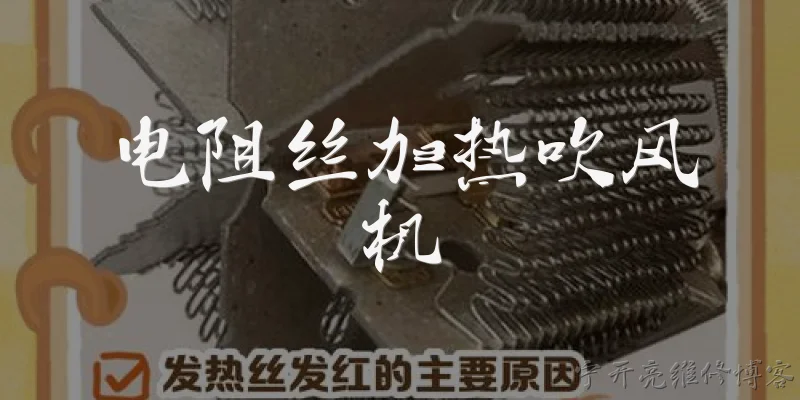
A: In a hair dryer, the heating element is typically a coil of resistance wire, such as nichrome, which has high electrical resistance and can withstand high temperatures without oxidizing. When electricity flows through the wire, its resistance causes electrical energy to be converted into heat. The wire becomes hot, and a fan blows air across it, transferring the heat to the airflow. The resistance wire is often wound around a mica or ceramic insulator to prevent short circuits and to distribute heat evenly. The amount of heat produced depends on the wire's resistance and the current passing through it. By adjusting the voltage or current, often via a switch or diode, the hair dryer can offer multiple heat settings.
Q: What is the purpose of using resistance wire in a hair dryer instead of other heating methods?
A: Resistance wire is chosen for hair dryers because it is simple, cost-effective, and highly efficient at converting electrical energy into heat. Unlike infrared or PTC heaters, resistance wire can reach high temperatures quickly, providing immediate heat output. It also allows for easy control of heat levels by varying the current. Additionally, resistance wire like nichrome is durable, resistant to oxidation at high temperatures, and has a long lifespan. Its flexibility allows it to be coiled into compact shapes, fitting inside the confined space of a hair dryer. Other methods, such as ceramic heaters, may heat up more slowly or cost more to manufacture. Thus, resistance wire offers a practical balance of performance, reliability, and affordability.
Q: What are the common failure modes of resistance wire heating elements in hair dryers?
A: Resistance wire heating elements in hair dryers can fail due to several reasons. Overheating is common if the airflow is blocked, causing the wire to melt or break. Repeated thermal expansion and contraction can lead to fatigue and eventual breakage. Oxidation or corrosion over time can increase resistance, reducing heat output and eventually causing an open circuit. Dust and lint buildup on the wire can also cause hot spots and premature failure. Additionally, mechanical stress from vibration or poor winding can damage the wire. To prevent these issues, hair dryers usually include thermal fuses and thermostats. Regular cleaning of the air intake and avoiding blockage can extend the life of the heating element. When the wire breaks, the hair dryer may stop heating but the fan may still run.
Q: How can you test or replace a resistance wire heating element in a hair dryer?
A: To test a resistance wire heating element, first unplug the hair dryer and disassemble it to access the heating element. Use a multimeter set to measure resistance (ohms) and touch the probes to the ends of the wire. A good element should show a low resistance, typically between 10 and 100 ohms, depending on the wattage. If the multimeter reads infinite resistance (open circuit), the wire is broken and needs replacement. To replace it, you can either purchase a new heating element assembly specific to your model or rewind the wire yourself using nichrome wire of the same gauge and resistance. Ensure the new wire is properly insulated and secured. Reassemble the hair dryer and test it. Always prioritize safety and avoid damaging other components.
Dialogue about
Common scenarios of "Resistance wire heating hair dryer"
【User】 I've heard that hair dryers work by heating air with a resistance wire. Can you explain how that actually works?
【Expert】 Absolutely! The core principle is Joule heating: when electric current flows through a resistive wire, electrical energy converts into heat. In a hair dryer, a long, thin wire made of a high-resistance alloy like nichrome is used. As current passes through it, it gets hot.
【User】 So the wire gets hot, but how does that heat the air?
【Expert】 A fan pulls air from the back and pushes it over the hot wire. As air passes, it absorbs heat from the wire and comes out warm from the front. It's a continuous flow: the wire stays hot because current keeps flowing, and the air carries the heat away.
【User】 Why nichrome? Couldn't they use copper or something?
【Expert】 Nichrome has high electrical resistance and doesn't oxidize easily at high temperatures. Copper has low resistance, so it would draw a huge current and might melt or cause a short circuit. Nichrome is ideal because it produces a lot of heat without burning out.
【User】 What controls the temperature? I've seen hair dryers with different heat settings.
【Expert】 Usually, there are multiple heating coils, and a switch selects how many are in the circuit. More coils in parallel mean lower total resistance, so more current and more heat. Some dryers also use a diode to reduce the voltage, which lowers the power and thus the heat.
【User】 Does the fan speed affect the temperature? I notice that on low fan speed, the air seems hotter.
【Expert】 Yes, exactly. If the fan moves less air, the same amount of heat is transferred to a smaller volume of air, so the air temperature rises. Conversely, higher fan speed spreads the heat over more air, resulting in cooler air.
【User】 Is there a risk of the wire overheating if the fan stops?
【Expert】 Definitely. Many hair dryers have a thermal fuse or a thermostat that cuts power if the temperature gets too high. Without airflow, the wire can overheat and potentially cause a fire. That's why you shouldn't block the air intake or exhaust.
【User】 What about the power consumption? How many watts does a typical hair dryer use?
【Expert】 Most hair dryers use between 1000 and 2000 watts. That's why they can heat up quickly. At 120 volts, a 1500-watt dryer draws about 12.5 amps, which is significant. That's also why they sometimes trip circuit breakers if used on the same circuit as other high-power appliances.
【User】 Can the resistance wire be replaced if it breaks?
【Expert】 In theory, yes, but in practice, it's often not worth it. The wire is usually part of a heating element assembly, and replacing it requires disassembling the dryer and finding a matching wire. Plus, if the wire broke, there might be other damage. It's safer to replace the whole dryer.
【User】 Are there any new technologies that replace resistance wire heating?
【Expert】 Some high-end dryers use brushless motors and advanced heating elements like PTC (positive temperature coefficient) ceramics, which self-regulate temperature. But the basic resistance wire is still common because it's cheap and effective.
【User】 How does the wire not melt? I mean, it's metal, but it gets red hot.
【Expert】 Nichrome has a high melting point around 1400°C, and the wire is designed to operate well below that, typically around 300-500°C. Also, the airflow continuously cools it. The wire is thin to increase resistance, but it's durable enough for the application.
【User】 What about safety features like ground fault circuit interrupters?
【Expert】 Hair dryers often have a GFCI plug, especially those sold in the US, because they're used near water. If there's a ground fault, it cuts power instantly to prevent electric shock. That's separate from the heating circuit but crucial for safety.
【User】 So the resistance wire is the heart of the hair dryer, but it needs careful engineering.
【Expert】 Exactly. It's a simple concept but requires precise design to balance heat output, airflow, safety, and durability. Next time you use a hair dryer, you'll appreciate the physics inside!