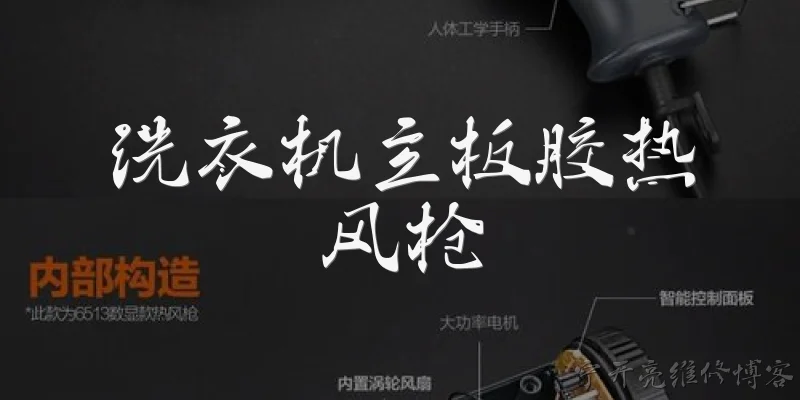
Washing machine mainboard glue hot air gun:Why is a hot air gun used when repairing a washing machine mainboard with glue?
Q: Why is a hot air gun used when repairing a washing machine mainboard with glue?
A: A hot air gun is essential for repairing a washing machine mainboard that has been glued or potted. Many modern mainboards are coated with a conformal coating or potting glue to protect against moisture and vibration. To access components or reflow solder joints, you must first soften or remove this glue. A hot air gun allows controlled heating of the adhesive without damaging nearby components. The heat breaks down the glue's bond, making it easier to scrape or peel away. It also helps when reflowing solder under glued components, as the hot air melts solder without direct contact. However, temperature must be carefully regulated—typically 150–200°C for glue softening and 300–350°C for soldering—to avoid burning the board or lifting pads. Using a hot air gun with adjustable airflow and temperature is therefore critical for safe and effective mainboard repair.
Q: What temperature should a hot air gun be set to when removing glue from a washing machine mainboard?
A: When using a hot air gun to remove glue from a washing machine mainboard, the ideal temperature depends on the type of adhesive. For common conformal coatings or silicone-based glues, set the gun to 150–200°C (300–390°F) with low airflow. This range softens the glue without charring the board or melting plastic connectors. If the glue is epoxy-based, you may need 200–250°C, but be cautious—excessive heat can damage ICs and delaminate the PCB. For soldering purposes after glue removal, increase to 300–350°C. Always test on a small area first, use a nozzle to focus heat, and keep the gun moving to avoid hotspots. A thermocouple or infrared thermometer helps verify the actual board temperature. Remember, too high a temperature will burn the glue, creating toxic fumes and making removal harder. Always work in a well-ventilated area and wear safety glasses.
Q: Can I use a hot air gun to reflow solder on a washing machine mainboard without removing the glue?
A: No, you should not attempt to reflow solder on a washing machine mainboard without first removing or softening the glue. The glue acts as a thermal insulator, preventing the hot air from reaching the solder joints evenly. This can cause uneven heating, leading to cold solder joints or damage to components. Additionally, the glue may expand or burn during heating, creating a messy residue that blocks access and can cause short circuits. In some cases, the glue can trap moisture, leading to popcorning or delamination. Therefore, the correct procedure is to first soften and remove the glue using a hot air gun at lower temperatures (150–200°C), then clean the area, and finally reflow the solder at higher temperatures (300–350°C). Always use flux to aid solder flow. If the glue is particularly stubborn, a combination of heat and isopropyl alcohol can help. Never skip glue removal—it's a critical step for reliable repairs.
Q: What safety precautions should I take when using a hot air gun on a washing machine mainboard with glue?
A: When using a hot air gun on a washing machine mainboard with glue, prioritize safety. First, work in a well-ventilated area or use a fume extractor, as heating glue can release toxic fumes. Wear safety glasses and heat-resistant gloves to protect against burns and flying debris. Keep a fire extinguisher nearby; hot air guns can ignite flammable materials. Set the temperature carefully—start low (150°C) and increase gradually. Avoid pointing the gun at your skin or flammable objects. Use a heat-resistant mat under the board. Never leave the gun unattended. After use, place it on a stand to cool. Be aware that capacitors on the mainboard may retain charge; discharge them before heating. Also, avoid inhaling solder fumes; use lead-free solder if possible. Finally, unplug the washing machine and remove the mainboard before any work. Following these precautions ensures a safe repair environment and prevents damage to the board or personal injury.
Dialogue about
Common scenarios of "Washing machine mainboard glue hot air gun"
【Repair Technician】 Hey, I'm trying to remove the glue from this washing machine mainboard to replace a component. I've got a hot air gun, but I'm not sure about the settings.
【Electronics Expert】 What temperature do you have it set to? You need to be careful not to damage the board or nearby components.
【Repair Technician】 I set it to 300°C. Is that too high? I've heard some people use 200°C for glue.
【Electronics Expert】 300°C might be okay for quick work, but it's risky. The glue used on these boards is often epoxy or silicone, which softens around 150-200°C. However, the PCB itself can degrade above 250°C. I'd recommend starting at 200°C and increasing if needed.
【Repair Technician】 Got it. I'll lower it to 200°C. Should I use a nozzle? I have a few different sizes.
【Electronics Expert】 Yes, a smaller nozzle helps focus the heat. Use a 5-6mm nozzle to avoid heating areas you don't want. Also, keep the gun moving in small circles to distribute heat evenly.
【Repair Technician】 Okay, moving in circles. How do I know when the glue is soft enough to remove?
【Electronics Expert】 The glue will become slightly glossy and pliable. You can test with a toothpick or a plastic scraper. Don't force it; if it's still hard, apply more heat.
【Repair Technician】 I see. I'll try that. What about protecting other components? Some are close by.
【Electronics Expert】 Use Kapton tape or aluminum foil to shield sensitive parts like capacitors and connectors. Also, keep the air flow low to medium to prevent blowing components off.
【Repair Technician】 Good tip. I have some Kapton tape. Should I preheat the board?
【Electronics Expert】 Preheating the whole board to about 100°C can help, but it's not always necessary. If you have a preheater, use it. Otherwise, just focus on the area.
【Repair Technician】 I don't have a preheater, so I'll just heat locally. After softening, how do I remove the glue without damaging traces?
【Electronics Expert】 Use a plastic tool like a spudger or a wooden stick. Gently pry under the glue. If it resists, apply more heat. Never use metal tools that could scratch the board.
【Repair Technician】 Understood. What about cleaning residue? Isopropyl alcohol?
【Electronics Expert】 Yes, 99% isopropyl alcohol works well. Use a brush and gently scrub. Avoid excessive liquid; you don't want it seeping into components.
【Repair Technician】 Great. I think I'm ready. Any final warnings?
【Electronics Expert】 Always work in a well-ventilated area. Hot air guns can produce fumes from glue. Also, let the board cool before powering it up.
【Repair Technician】 Thanks for all the advice. I'll proceed carefully.
【Electronics Expert】 You're welcome. Good luck with the repair!