
Working principle of induction cooker heating plate:How does the heating plate in an induction cooker actually work?
Q: How does the heating plate in an induction cooker actually work?
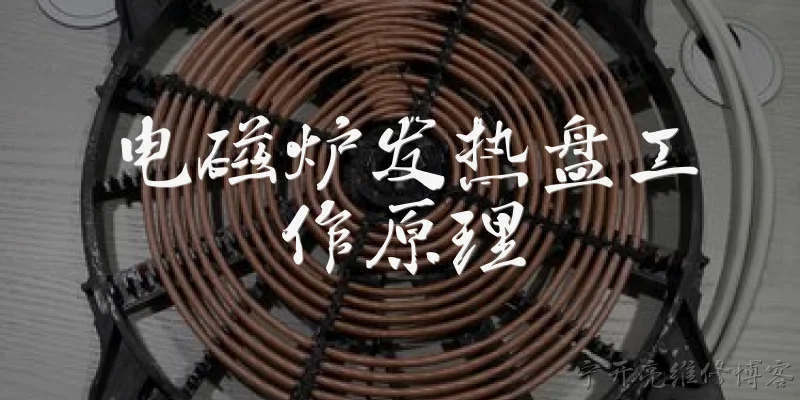
A: The heating plate in an induction cooker is not a traditional heating element; it is a coil of copper wire through which a high-frequency alternating current flows. This current generates a rapidly changing magnetic field. When a ferromagnetic pot (like cast iron or stainless steel) is placed on the plate, the magnetic field induces eddy currents within the pot's base. These eddy currents encounter resistance in the metal, producing Joule heating directly in the cookware. The plate itself remains relatively cool because the heat is generated in the pot, not the coil. The high frequency (typically 20–40 kHz) ensures efficient energy transfer and precise control. Thus, the 'heating plate' is actually an electromagnetic coil that transfers energy inductively.
Q: Why does an induction cooker require a special pot to work?
A: An induction cooker requires a pot made of ferromagnetic material because the heating principle depends on magnetic induction. The coil in the cooker generates a high-frequency magnetic field, but this field can only induce eddy currents in materials with high magnetic permeability and electrical conductivity, such as iron or certain stainless steels. Non-ferromagnetic pots (e.g., aluminum, copper, glass) do not interact with the magnetic field effectively, so little or no heat is produced. Some induction cookers detect the presence of a suitable pot and will not operate without one, for safety and efficiency. Therefore, the pot's base must be capable of concentrating the magnetic flux to generate heat. That's why induction cooking is often called 'induction heating'.
Q: What is the role of the high-frequency current in an induction cooker's heating plate?
A: The high-frequency current (typically 20–40 kHz) is crucial for efficient induction heating. It flows through the coil in the heating plate, creating a rapidly alternating magnetic field. This frequency is much higher than mains frequency (50/60 Hz), which increases the rate of change of magnetic flux. According to Faraday's law, a faster-changing flux induces stronger eddy currents in the pot's base. Higher frequency also reduces skin depth, concentrating the induced currents near the surface of the pot bottom, which improves heating efficiency. Additionally, the high frequency allows for smaller, lighter transformer components in the cooker's power supply. The inverter circuit converts the low-frequency AC from the outlet into this high-frequency AC, enabling precise power control and rapid heating.
Q: Does the heating plate of an induction cooker get hot itself?
A: No, the heating plate itself does not get hot during normal operation, except indirectly from the pot's heat radiating back. The coil is made of copper, which has very low resistance, so the high-frequency current produces minimal resistive heating in the coil. The heat is generated almost entirely within the ferromagnetic base of the cookware due to eddy currents and magnetic hysteresis losses. The plate may become warm after prolonged use due to heat conduction from the hot pot, but it is not the primary heat source. This is why induction cookers are considered safer and more efficient—the surface stays relatively cool, reducing burn risks. However, the cooker's electronics and the coil may still require cooling fans to dissipate residual heat.
Words of experience
Common scenarios of "Working principle of induction cooker heating plate"
【Curious Learner】 Hi! I've always wondered how an induction cooker heats up a pot without getting hot itself. Can you explain the basic principle?
【Expert】 Great question! An induction cooker uses a coil of copper wire beneath the glass-ceramic surface. When alternating current flows through this coil, it creates a rapidly changing magnetic field.
【Curious Learner】 So the magnetic field is the key? How does that actually heat the pot?
【Expert】 Exactly. The changing magnetic field induces eddy currents in the ferromagnetic base of the pot. These circulating currents encounter electrical resistance in the metal, which produces heat through Joule heating.
【Curious Learner】 Eddy currents... I've heard of those. So the pot itself becomes the heating element?
【Expert】 Yes, that's right. The pot is the heating element. The cooker's surface stays relatively cool because the glass-ceramic doesn't conduct the magnetic field into heat—only the pot does.
【Curious Learner】 But why does the pot need to be ferromagnetic? Couldn't any metal work?
【Expert】 Ferromagnetic materials like iron or stainless steel have high magnetic permeability, which concentrates the magnetic field and increases eddy currents. Copper or aluminum have low permeability and low resistance, so they heat poorly or not at all.
【Curious Learner】 So if I put an aluminum pot on an induction cooker, nothing happens?
【Expert】 Correct, it won't heat efficiently. Some induction cookers have a 'pan detection' feature that won't even start if the pan isn't ferromagnetic.
【Curious Learner】 What about the frequency of the alternating current? Does that matter?
【Expert】 Yes, typical induction cookers operate at 20–50 kHz. Higher frequencies induce stronger eddy currents, but also increase switching losses in the electronics. It's a balance.
【Curious Learner】 I see. So the coil is powered by an inverter that converts the mains AC to high-frequency AC?
【Expert】 Exactly. The mains AC is rectified to DC, then an inverter circuit using IGBTs or MOSFETs switches it at high frequency to feed the coil. A control circuit adjusts the frequency to regulate power.
【Curious Learner】 How does changing the frequency control the power?
【Expert】 By changing the frequency, the circuit alters the impedance of the coil-pot system. Near resonance, the current is high; shifting away reduces current and thus heating power. It's like tuning a radio.
【Curious Learner】 So there's a resonant tank circuit? Like an LC circuit?
【Expert】 Yes, the coil has inductance, and capacitors are added to form a resonant tank. The inverter drives it near resonance for efficient power transfer.
【Curious Learner】 Does the pot's material affect the resonance?
【Expert】 Absolutely. The pot acts as a coupled secondary coil, changing the effective inductance and resistance. The control system continuously adjusts to maintain the desired power.
【Curious Learner】 What about safety? How does it avoid heating accidentally?
【Expert】 It uses sensors to detect pan presence and temperature. If no pan is detected, it shuts off. Also, the surface only gets hot from the pot's heat conduction, not from the coil directly.
【Curious Learner】 So the glass-ceramic top stays cool unless the pot heats it?
【Expert】 Right. The glass-ceramic is not magnetic and doesn't absorb the field, so it remains cool. Any heat on the surface comes from the pot transferring heat back.
【Curious Learner】 That explains why you can touch the surface soon after removing the pot. Thanks for the clear explanation!
【Expert】 You're welcome! Induction heating is a brilliant application of electromagnetic induction. Glad I could help.