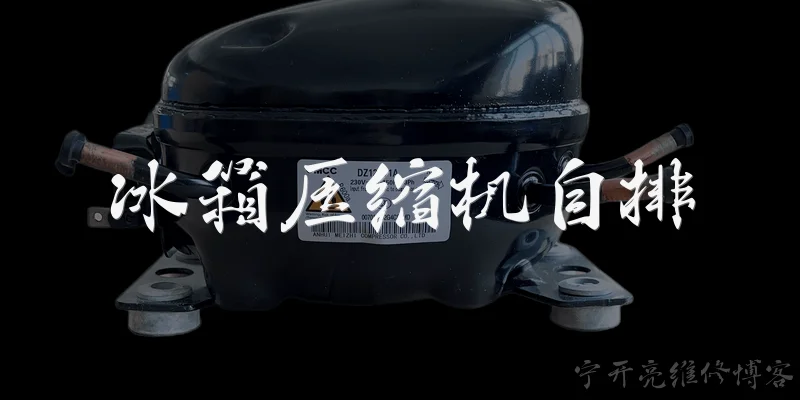
Refrigerator compressor self-draining:What is a self-draining refrigerator compressor and how does it work?
Q: What is a self-draining refrigerator compressor and how does it work?
A: A self-draining refrigerator compressor is designed to automatically remove accumulated oil or liquid refrigerant from the compressor's crankcase or suction line, preventing slugging and oil logging. It typically uses a small drainage tube or orifice connected to the suction side, allowing excess oil to return to the compressor sump while refrigerant vapor continues circulating. Some models incorporate a heated drain pan or a solenoid valve that opens during off-cycles. This self-draining action helps maintain proper lubrication, reduces wear on internal parts, and improves overall system efficiency by avoiding liquid migration into the compression chamber.
Q: Why is self-draining important for a refrigerator compressor's reliability?
A: Self-draining is critical because liquid refrigerant or excess oil entering the compressor can cause hydrostatic lock, leading to broken valves, bent connecting rods, or motor burnout. In normal operation, some oil circulates with refrigerant, but if it pools in the compressor, it displaces lubricant and increases friction. A self-draining design ensures that oil returns to the sump and any liquid refrigerant evaporates before compression. This prevents slugging at startup, especially after long off-cycles in cold environments. Reliable self-draining extends compressor life, reduces maintenance calls, and keeps the refrigerator cooling consistently without unexpected failures.
Q: What are common signs that a refrigerator compressor's self-draining feature is failing?
A: Signs include unusual knocking or rattling noises at startup, which suggest liquid slugging. You may also notice reduced cooling capacity, frequent compressor cycling, or higher than normal energy consumption. Oil traces around the compressor base or in the suction line indicate poor drainage. In severe cases, the compressor overheats and trips its thermal overload. A failed self-draining mechanism often leads to oil logging, where oil traps in the evaporator and starves the compressor. If you see frost buildup on the suction line or hear gurgling sounds, the drain may be blocked. Prompt diagnosis prevents total compressor failure.
Q: How can you maintain or troubleshoot a self-draining refrigerator compressor?
A: Start by checking the drain tube or orifice for blockages from debris or carbonized oil. Use a soft wire or compressed air to clear it gently. Verify that the compressor sits level so oil flows correctly. Inspect the crankcase heater, if equipped, as it helps evaporate liquid before startup. For systems with a solenoid valve, test its electrical continuity and clean the valve seat. If oil appears in the suction line, check the accumulator and oil separator. Always recover refrigerant properly before opening the system. After maintenance, monitor pressures and temperatures to confirm self-draining works and no liquid returns to the compressor.
Q: Does a self-draining compressor affect refrigerator energy efficiency and performance?
A: Yes, a properly functioning self-draining compressor improves energy efficiency by preventing liquid refrigerant from being compressed, which would otherwise reduce volumetric efficiency and increase power draw. When oil returns to the sump correctly, friction and heat generation drop, lowering compressor runtime. However, a faulty self-draining feature can degrade performance: oil logging reduces heat transfer in the evaporator, forcing the compressor to work harder and consume more electricity. Some modern refrigerators use self-draining designs with variable-speed compressors to further optimize efficiency. Regular maintenance ensures the self-draining action supports rated efficiency and consistent cooling.
Words of experience
Common scenarios of "Refrigerator compressor self-draining"
【User】 Hi, I've been having an issue with my refrigerator. There's water pooling at the bottom inside, and I read somewhere that it might be related to the compressor self-draining. Can you explain what that means?
【Technician】 Hello! I'd be happy to help. 'Compressor self-draining' isn't a standard term, but I think you're referring to the defrost drain system. The compressor itself doesn't drain water; rather, the evaporator coils behind the freezer produce condensation during defrost cycles. That water flows down a drain tube to a pan near the compressor, where it evaporates. If that drain gets clogged, water backs up inside.
【User】 Oh, I see. So the compressor isn't actually draining water? Then why do I sometimes hear water dripping near the back of the fridge?
【Technician】 That dripping sound is normal—it's the defrost water trickling into the drain pan. The compressor's heat helps evaporate that water. The term 'self-draining' might come from the fact that the system is designed to dispose of the water automatically, without you needing to empty a tray.
【User】 Got it. So if water is pooling inside my fridge, the drain tube is probably clogged. How can I check that?
【Technician】 First, unplug the fridge. Locate the drain hole at the back of the freezer compartment, usually under the evaporator coils. If you see ice or debris, that's the clog. You can use a turkey baster with warm water to flush it, or a pipe cleaner to gently clear it. Be careful not to damage the tube.
【User】 Okay, I'll try that. But what if the clog is further down, near the compressor? I can't easily access that area.
【Technician】 If the upper drain is clear but water still pools, the clog might be in the lower section. You may need to pull the fridge out and remove the back panel to access the drain tube and pan. Sometimes a buildup of dust or mold causes a blockage. A long flexible brush can help. If you're not comfortable, call a pro.
【User】 I might call a pro. But before that, is there anything else that could cause water inside besides a clogged drain?
【Technician】 Yes, other causes include a faulty door seal letting warm air in, a defrost heater failure causing excessive ice that melts later, or a cracked drain pan. Also, if the fridge is not level, water can pool in the wrong spot. Check the door gasket first—it's a common culprit.
【User】 I'll check the door seal. How do I know if it's faulty?
【Technician】 Do the dollar bill test: close the door on a dollar bill and try to pull it out. If it slides easily, the seal is weak. Also look for cracks, tears, or gaps. A faulty seal lets humid air in, which freezes and then melts, overwhelming the drain.
【User】 That's helpful. And what about the compressor itself? Could a problem with the compressor cause water issues?
【Technician】 Not directly. The compressor is a sealed system that circulates refrigerant. It doesn't produce water. However, if the compressor is overheating or short-cycling, it might not generate enough heat to evaporate the water in the drain pan, leading to overflow. But that's rare. Usually, the issue is a clog or a defrost problem.
【User】 So the water in the drain pan normally evaporates because of the compressor's heat. If the compressor is weak, the pan could overflow?
【Technician】 Exactly. If the compressor is not running efficiently, it produces less heat, so the water in the pan may not evaporate fast enough. But in most cases, the pan is large enough to handle normal condensation. Overflow usually means too much water is entering, not that evaporation is too slow.
【User】 I see. So my first step should be to clear the drain and check the door seal. If that doesn't work, I'll call you. Thanks for explaining!
【Technician】 You're welcome! Remember to unplug the fridge before any work. If you see standing water near the compressor or notice a burning smell, stop and call a professional immediately. Good luck!