Inverter AC outdoor unit pipe temperature sensor:What is the inverter AC outdoor unit pipe temperature sensor and what does it do?
Q: What is the inverter AC outdoor unit pipe temperature sensor and what does it do?
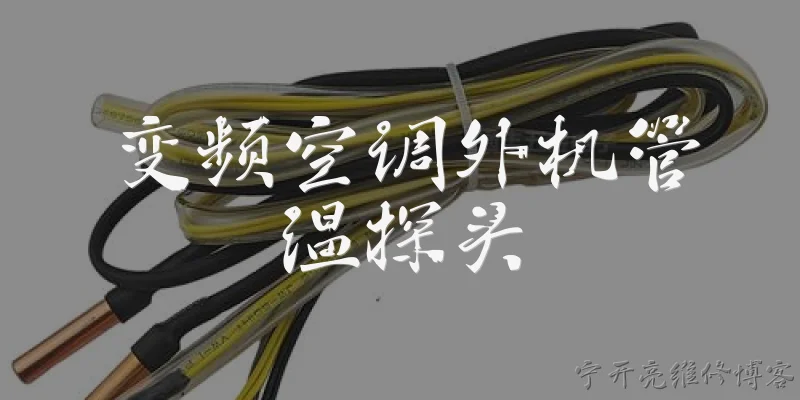
A: The inverter AC outdoor unit pipe temperature sensor is a small thermistor mounted on the copper piping of the outdoor unit, usually on the liquid line, suction line, or discharge line. Its main job is to measure the refrigerant pipe temperature in real time and send that data to the outdoor control board. Because inverter air conditioners continuously vary compressor speed, the control board relies on this sensor to calculate superheat, detect refrigerant charge problems, and decide how fast the compressor should run. For example, during heating mode, the pipe sensor helps the board decide when to trigger defrost by detecting low outdoor coil temperatures. During cooling, it helps prevent liquid refrigerant from returning to the compressor by monitoring suction line temperature. If the sensor reading drifts or fails, the system may run at fixed speed, short-cycle, or show an error code such as a pipe temperature sensor fault. In short, it is a key feedback device that keeps an inverter AC efficient, safe, and responsive to changing indoor and outdoor conditions.
Q: What are the common symptoms of a faulty pipe temperature sensor on an inverter AC outdoor unit?
A: When the pipe temperature sensor on an inverter AC outdoor unit fails, you will usually notice several clear symptoms. The most common is an error code on the indoor display or outdoor board, often labeled as pipe sensor fault, outdoor pipe temp error, or a code like E5, F3, or P4 depending on the brand. The compressor may stop running entirely or only run at a fixed low speed, which reduces cooling or heating capacity. You may also see frequent defrost cycles in heating mode, even when the outdoor coil is not frozen, because the board receives incorrect temperature data. Another symptom is short cycling: the unit starts, runs briefly, then shuts down repeatedly. In some cases, the fan runs but the compressor never starts. If the sensor resistance drifts rather than fails completely, the system may still operate but with poor efficiency, higher energy bills, and uneven room temperatures. Technicians typically confirm the fault by measuring the sensor resistance with a multimeter and comparing it to the manufacturer's temperature-resistance table; a reading far outside the normal range confirms the sensor is defective.
Q: How do you test and replace an inverter AC outdoor unit pipe temperature sensor?
A: Testing and replacing an inverter AC outdoor unit pipe temperature sensor is a straightforward job for a qualified technician. First, disconnect power at the breaker and remove the outdoor unit's service panel to access the sensor, which is usually clipped to a copper pipe and connected to the control board by a two-wire plug. Unplug the sensor and measure its resistance with a multimeter. At around 25°C (77°F), most AC pipe sensors read roughly 10kΩ to 15kΩ, but always check the service manual because values vary by brand. You can also compare the resistance to the manufacturer's temperature-resistance chart while warming or cooling the sensor. If the reading is open, shorted, or far off the chart, replace it. To replace, pull the old sensor from its clip, remove any insulation or tie wraps, and install the new sensor in the same position with good metal-to-metal contact. Use thermal paste if specified, secure the wiring away from sharp edges and hot surfaces, then reconnect the plug. Restore power and run the unit in cooling and heating to confirm normal operation and clear any error codes.
Words of experience
Common scenarios of "Inverter AC outdoor unit pipe temperature sensor"
【Customer】 Hi, I'm having an issue with my inverter AC. The outdoor unit seems to be running but not cooling properly. Could it be a sensor problem?
【Technician】 Hello! It's possible. The outdoor unit pipe temperature sensor is a common culprit. Have you noticed any error codes on the indoor unit?
【Customer】 Yes, actually. It's showing an E5 error code. Does that indicate a sensor issue?
【Technician】 E5 typically points to an outdoor pipe temperature sensor fault. Let's check the sensor's resistance. Do you have a multimeter?
【Customer】 I do. Where exactly is the sensor located on the outdoor unit?
【Technician】 It's usually attached to the copper pipe near the compressor or the condenser coil. Look for a small black or white connector with two wires.
【Customer】 Found it. I disconnected it and measured the resistance. It reads about 10k ohms at room temperature. Is that normal?
【Technician】 At 25°C, a typical sensor should be around 10k ohms, so that seems fine. But resistance can change with temperature. Let's check if the sensor responds to temperature changes.
【Customer】 How do I test that? Should I apply heat or cold?
【Technician】 You can gently warm it with your hand or a hair dryer. The resistance should decrease as it warms up. If it doesn't change, the sensor is faulty.
【Customer】 I warmed it a bit, and the resistance dropped to about 8k ohms. That seems to be working, right?
【Technician】 Yes, that indicates the sensor is likely good. The issue might be elsewhere, like a dirty condenser coil or low refrigerant. Let's check the coil first.
【Customer】 The coil looks pretty dusty. Could that cause the E5 error?
【Technician】 Not directly. E5 is specific to the sensor circuit. But a dirty coil can cause high pressures and affect performance. However, if the sensor is fine, the error might be due to a loose connection or a faulty control board.
【Customer】 I see. How can I check the connection?
【Technician】 Inspect the connector for corrosion or loose pins. Also, check the wire harness for any damage. If that's all good, the control board might be misreading the sensor.
【Customer】 The connector looks clean and tight. No visible damage. What about the control board?
【Technician】 If the board is faulty, it might not interpret the sensor signal correctly. You could test the voltage at the sensor connector. Typically, it should be around 5V DC. If it's off, the board is suspect.
【Customer】 I measured 5V, so that seems okay. Could the sensor still be intermittent?
【Technician】 Yes, intermittent sensor failures can happen. You might need to replace it as a precaution. But since it tested fine, I'd recommend cleaning the coil and resetting the system first. If the error persists, replace the sensor.